Ghost Jobs Are Not a Bug. They’re the Product.
Ghost Jobs Are Not a Bug. They’re the Product.
Ghost Jobs Are Not a Bug. They’re the Product.
The job listing was real. The intention to hire wasn't.
The job listing was real. The intention to hire wasn't.
The job listing was real. The intention to hire wasn't.

5 min read
5 min read
5 min read
Get weekly updates
Get weekly updates
Opinions
Opinions
Opinions
Published on:
Published on:
Published on:
Read Time:
Read Time:
Read Time:
Category:
Category:
Category:
93% of HR professionals admit to posting jobs they have no intention of filling. The hiring market has a phantom workforce problem, and it was built on purpose.
Every week, millions of people do the same thing.
They update their resume. They tailor their cover letter. They research the company. They spend 45 minutes on an application for a role that looks perfect, the right title, the right industry, the right salary band. They submit it. They wait.
They never hear back.
Most assume the rejection is about them. Their experience. Their wording. Their formatting. They revise. They reapply elsewhere. The cycle continues.
Some of those applications were never going to get a response. Not because the candidate was wrong. Because the job was never real.
The Scale of the Fiction
The numbers on ghost jobs are difficult to believe until you look at who is reporting them.
93% of HR professionals acknowledge posting ghost jobs, regularly or occasionally (LiveCareer, 2025) |
1 in 3 employers admits to posting jobs with no real intention to fill them in the near term (Clarify Capital) |
27.4% of U.S. job listings on LinkedIn are likely ghost jobs with no active hiring intent |
These are not estimates from disgruntled job seekers. They are self-reported figures from the HR professionals doing the posting. This is not a fringe behavior. It is not a bug in the system. It is the norm, and most of the people doing it are quite aware that they are doing it.
Why Companies Post Jobs They Don’t Intend to Fill?
The phrase “ghost job” implies deception. But the motivations behind these postings are more structural than malicious. Understanding them matters, because the solution is not simply asking companies to behave better.
• Pipeline building. Recruiters post roles to collect a pool of candidates for positions they anticipate needing in a quarter or six months. The listing is not fraudulent in the recruiter’s mind. It is a lead magnet for future positions. The candidate has no way to know this.
• Market intelligence. A live job posting is a market research instrument. It tells you what competitors are paying, how candidates describe their experience, and which skill sets are available. Companies post roles to gather this data without committing to a hire.
• Board and investor optics. When a company is under pressure to demonstrate growth, active job listings are visible evidence of expansion. They signal health to investors and customers. The listings are for the market, not the candidates.
• Internal leverage. An open posting serves as a benchmark against which current employees can be implicitly measured, or as an implicit threat when someone is asking for a raise. “We can always hire for this role” is a much stronger position when the listing is live.
• Budget hedging. Headcount can be approved in principle and then frozen in practice. The recruiter who posted the role in January may have had a genuine position to fill. The budget that was meant to fund it may have evaporated by March. The listing stays up because no one updated it, and because there is no incentive to.
None of these motivations require anyone at the company to feel like they are doing something wrong. But they impose a very real cost on the people on the other side of the application.
The Human Cost of Participating in a Market That Doesn’t Exist
Hiring processes are already among the most psychologically taxing experiences working people routinely go through. The American Psychological Association’s 2025 Work in America survey found that job security is one of the top sources of workplace stress for U.S. workers. Research consistently links extended job searching to anxiety, depression, and erosion of self-esteem.
Ghost jobs industrialise that uncertainty. When a significant fraction of listings are never going to be filled, the feedback signal breaks entirely. |
A job seeker who applies to fifty positions and hears back from three is not learning that their profile matches 6% of roles. They may be learning nothing useful at all, because some unknown fraction of those forty-seven listings were not real opportunities. There is no way to distinguish a genuine rejection from a listing that was never read, from a listing that was never meant to produce a hire.
7 in 10 job seekers say being ghosted by an employer has negatively affected their mental health and motivation (2025 survey) |
For someone who has been laid off, who is running down savings, who is trying to assess whether their skills are marketable, this kind of systematic uncertainty is deeply destabilising. The candidate who spends weeks preparing for a process that was never going to result in a hire has been made to invest real emotional capital in a transaction that was, from one side, largely performative.
The Amplification Problem
Ghost jobs are not new. But the current moment has made them significantly worse.
Easy Apply mechanics on LinkedIn and Indeed were designed to reduce candidate friction. They succeeded. The cost of applying dropped toward zero. Application volumes exploded. LinkedIn reported 11,000 applications submitted every minute in 2024.
When the cost of applying falls, the volume of applications rises. When the volume rises, companies post more speculative listings to manage pipeline. When more speculative listings appear, more candidates apply to each one. The ratio of genuine opportunities to total applications does not improve. It deteriorates.
AI has added another layer. When AI tools can generate tailored applications in minutes, the economics shift further. Recruiters report drowning in volume. Companies implement more automated screening. The processing of applications by algorithm makes it even less likely that a human ever meaningfully engages with a submission for a role that was not actively being filled in the first place.
The result is a feedback loop where both sides invest more and learn less. The job board shows activity. The labour market data shows openings. The candidate’s inbox stays empty. |
What the Data Says About the Labour Market Illusion?
There is a macroeconomic dimension to this that extends beyond individual job seekers.
The Bureau of Labour Statistics reports job openings using JOLTS data, which counts active postings. If a meaningful fraction of those postings represent phantom demand, then the metric we use to assess labour market tightness is systematically overstated.
2.2M+ jobs per month: the gap between reported openings and actual hirings since early 2024 (BLS JOLTS) |
Some of that gap is structural mismatch. Some of it is the normal lag between posting and filling. But if 20 to 30% of postings were never intended to be filled, then the “openings” figure paints a picture of available opportunities that does not exist in practice.
Policy decisions, wage negotiations, career choices, geographic mobility, all of these are influenced by perceptions of labour market conditions. A phantom layer of job listings distorts those perceptions for everyone who relies on them.
The Regulatory Response
Governments are starting to notice.
Ontario’s Working for Workers Five Act, passed in January 2026, requires companies with 25 or more employees to disclose whether a position is actively being filled. Employers must notify interviewed candidates within 45 days of a hiring decision. It is the first legislation of its kind in North America.
The U.S. Congressional Research Service published an analysis of ghost jobs in April 2025, noting the absence of official federal statistics on their prevalence and flagging them as a developing labour market concern.
These are early signals. The regulatory infrastructure to address this systematically does not yet exist at scale. But the direction of travel is clear: jurisdictions that take candidate welfare seriously are beginning to treat phantom job postings as a form of market manipulation that warrants disclosure requirements, if not prohibition.
The Question No One Asks
Ghost jobs exist because there is no cost to posting them.
Running a job listing is cheap. Keeping it live after the role has been filled, frozen, or deprioritised costs nothing. There is no mechanism that requires a company to update a posting’s status, disclose its current priority, or acknowledge that a role that appeared open three months ago has not moved forward. The information asymmetry is total and structural.
Candidates are asked to invest significant time, preparation, and emotional energy in a process whose fundamental integrity they have no way to verify.
This is not a problem that better AI screening solves. It is not a problem that improved resume formats address. It is a fundamental honesty problem in how hiring demand is communicated. |
The technology exists to solve it. A job posting could carry a status updated in real time: actively interviewing, paused, filled, speculative pipeline. Platforms could require confirmation from the ATS that the role is active. Audit mechanisms could penalise companies whose postings consistently produce no hires.
None of these things require major innovation. They require the platforms hosting these listings to decide that candidate trust is worth protecting, and to build mechanisms that make dishonest posting carry a cost.
Until that happens, the practical advice to job seekers:
• Treat every listing as a lead to be qualified, not a door that is open.
• Apply laterally and reach the recruiter directly where possible.
• Treat your response rate as data, not as a verdict on your candidacy.
But do not mistake what this advice is. It is a workaround for a system that is not working. The broken part is not the candidates.
AgentR helps companies build hiring processes that reflect genuine demand, where every listing represents a real opportunity and every candidate gets a fair evaluation. If your hiring signals are telling you one thing and your hire rate is telling you another, visit agentr.global.
93% of HR professionals admit to posting jobs they have no intention of filling. The hiring market has a phantom workforce problem, and it was built on purpose.
Every week, millions of people do the same thing.
They update their resume. They tailor their cover letter. They research the company. They spend 45 minutes on an application for a role that looks perfect, the right title, the right industry, the right salary band. They submit it. They wait.
They never hear back.
Most assume the rejection is about them. Their experience. Their wording. Their formatting. They revise. They reapply elsewhere. The cycle continues.
Some of those applications were never going to get a response. Not because the candidate was wrong. Because the job was never real.
The Scale of the Fiction
The numbers on ghost jobs are difficult to believe until you look at who is reporting them.
93% of HR professionals acknowledge posting ghost jobs, regularly or occasionally (LiveCareer, 2025) |
1 in 3 employers admits to posting jobs with no real intention to fill them in the near term (Clarify Capital) |
27.4% of U.S. job listings on LinkedIn are likely ghost jobs with no active hiring intent |
These are not estimates from disgruntled job seekers. They are self-reported figures from the HR professionals doing the posting. This is not a fringe behavior. It is not a bug in the system. It is the norm, and most of the people doing it are quite aware that they are doing it.
Why Companies Post Jobs They Don’t Intend to Fill?
The phrase “ghost job” implies deception. But the motivations behind these postings are more structural than malicious. Understanding them matters, because the solution is not simply asking companies to behave better.
• Pipeline building. Recruiters post roles to collect a pool of candidates for positions they anticipate needing in a quarter or six months. The listing is not fraudulent in the recruiter’s mind. It is a lead magnet for future positions. The candidate has no way to know this.
• Market intelligence. A live job posting is a market research instrument. It tells you what competitors are paying, how candidates describe their experience, and which skill sets are available. Companies post roles to gather this data without committing to a hire.
• Board and investor optics. When a company is under pressure to demonstrate growth, active job listings are visible evidence of expansion. They signal health to investors and customers. The listings are for the market, not the candidates.
• Internal leverage. An open posting serves as a benchmark against which current employees can be implicitly measured, or as an implicit threat when someone is asking for a raise. “We can always hire for this role” is a much stronger position when the listing is live.
• Budget hedging. Headcount can be approved in principle and then frozen in practice. The recruiter who posted the role in January may have had a genuine position to fill. The budget that was meant to fund it may have evaporated by March. The listing stays up because no one updated it, and because there is no incentive to.
None of these motivations require anyone at the company to feel like they are doing something wrong. But they impose a very real cost on the people on the other side of the application.
The Human Cost of Participating in a Market That Doesn’t Exist
Hiring processes are already among the most psychologically taxing experiences working people routinely go through. The American Psychological Association’s 2025 Work in America survey found that job security is one of the top sources of workplace stress for U.S. workers. Research consistently links extended job searching to anxiety, depression, and erosion of self-esteem.
Ghost jobs industrialise that uncertainty. When a significant fraction of listings are never going to be filled, the feedback signal breaks entirely. |
A job seeker who applies to fifty positions and hears back from three is not learning that their profile matches 6% of roles. They may be learning nothing useful at all, because some unknown fraction of those forty-seven listings were not real opportunities. There is no way to distinguish a genuine rejection from a listing that was never read, from a listing that was never meant to produce a hire.
7 in 10 job seekers say being ghosted by an employer has negatively affected their mental health and motivation (2025 survey) |
For someone who has been laid off, who is running down savings, who is trying to assess whether their skills are marketable, this kind of systematic uncertainty is deeply destabilising. The candidate who spends weeks preparing for a process that was never going to result in a hire has been made to invest real emotional capital in a transaction that was, from one side, largely performative.
The Amplification Problem
Ghost jobs are not new. But the current moment has made them significantly worse.
Easy Apply mechanics on LinkedIn and Indeed were designed to reduce candidate friction. They succeeded. The cost of applying dropped toward zero. Application volumes exploded. LinkedIn reported 11,000 applications submitted every minute in 2024.
When the cost of applying falls, the volume of applications rises. When the volume rises, companies post more speculative listings to manage pipeline. When more speculative listings appear, more candidates apply to each one. The ratio of genuine opportunities to total applications does not improve. It deteriorates.
AI has added another layer. When AI tools can generate tailored applications in minutes, the economics shift further. Recruiters report drowning in volume. Companies implement more automated screening. The processing of applications by algorithm makes it even less likely that a human ever meaningfully engages with a submission for a role that was not actively being filled in the first place.
The result is a feedback loop where both sides invest more and learn less. The job board shows activity. The labour market data shows openings. The candidate’s inbox stays empty. |
What the Data Says About the Labour Market Illusion?
There is a macroeconomic dimension to this that extends beyond individual job seekers.
The Bureau of Labour Statistics reports job openings using JOLTS data, which counts active postings. If a meaningful fraction of those postings represent phantom demand, then the metric we use to assess labour market tightness is systematically overstated.
2.2M+ jobs per month: the gap between reported openings and actual hirings since early 2024 (BLS JOLTS) |
Some of that gap is structural mismatch. Some of it is the normal lag between posting and filling. But if 20 to 30% of postings were never intended to be filled, then the “openings” figure paints a picture of available opportunities that does not exist in practice.
Policy decisions, wage negotiations, career choices, geographic mobility, all of these are influenced by perceptions of labour market conditions. A phantom layer of job listings distorts those perceptions for everyone who relies on them.
The Regulatory Response
Governments are starting to notice.
Ontario’s Working for Workers Five Act, passed in January 2026, requires companies with 25 or more employees to disclose whether a position is actively being filled. Employers must notify interviewed candidates within 45 days of a hiring decision. It is the first legislation of its kind in North America.
The U.S. Congressional Research Service published an analysis of ghost jobs in April 2025, noting the absence of official federal statistics on their prevalence and flagging them as a developing labour market concern.
These are early signals. The regulatory infrastructure to address this systematically does not yet exist at scale. But the direction of travel is clear: jurisdictions that take candidate welfare seriously are beginning to treat phantom job postings as a form of market manipulation that warrants disclosure requirements, if not prohibition.
The Question No One Asks
Ghost jobs exist because there is no cost to posting them.
Running a job listing is cheap. Keeping it live after the role has been filled, frozen, or deprioritised costs nothing. There is no mechanism that requires a company to update a posting’s status, disclose its current priority, or acknowledge that a role that appeared open three months ago has not moved forward. The information asymmetry is total and structural.
Candidates are asked to invest significant time, preparation, and emotional energy in a process whose fundamental integrity they have no way to verify.
This is not a problem that better AI screening solves. It is not a problem that improved resume formats address. It is a fundamental honesty problem in how hiring demand is communicated. |
The technology exists to solve it. A job posting could carry a status updated in real time: actively interviewing, paused, filled, speculative pipeline. Platforms could require confirmation from the ATS that the role is active. Audit mechanisms could penalise companies whose postings consistently produce no hires.
None of these things require major innovation. They require the platforms hosting these listings to decide that candidate trust is worth protecting, and to build mechanisms that make dishonest posting carry a cost.
Until that happens, the practical advice to job seekers:
• Treat every listing as a lead to be qualified, not a door that is open.
• Apply laterally and reach the recruiter directly where possible.
• Treat your response rate as data, not as a verdict on your candidacy.
But do not mistake what this advice is. It is a workaround for a system that is not working. The broken part is not the candidates.
AgentR helps companies build hiring processes that reflect genuine demand, where every listing represents a real opportunity and every candidate gets a fair evaluation. If your hiring signals are telling you one thing and your hire rate is telling you another, visit agentr.global.

Great hiring starts with great decisions.
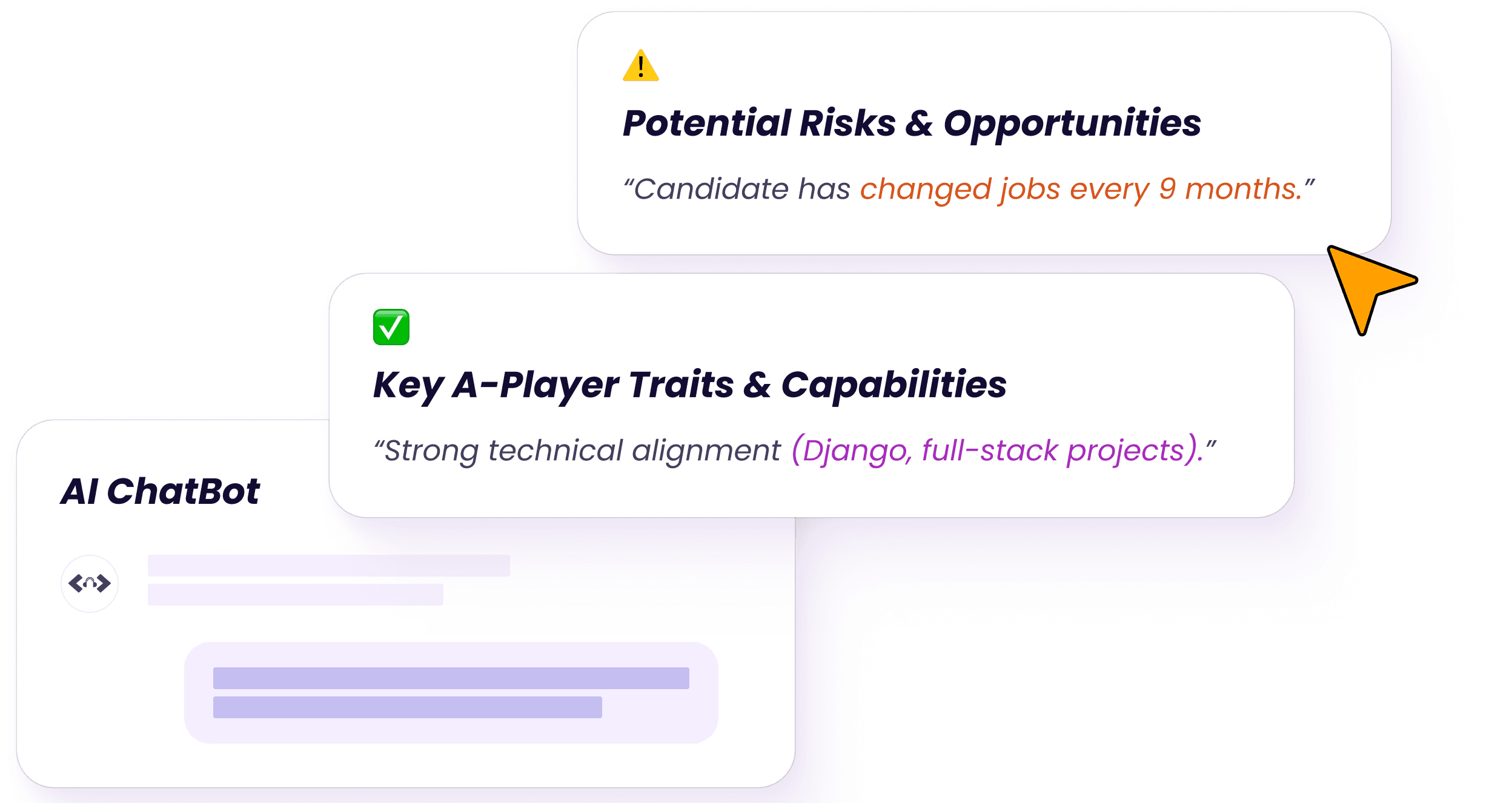
Let AgentR surface the patterns, risks, and opportunities, while you focus on the people.
Great hiring starts with great decisions.
Let AgentR surface the patterns, risks, and opportunities, while you focus on the people.
Great hiring starts with great decisions.
Let AgentR surface the patterns, risks, and opportunities, while you focus on the people.
2026 AgentR, All rights reserved