The Job You Posted Cannot Be Filled. Here’s Why.
The Job You Posted Cannot Be Filled. Here’s Why.
The Job You Posted Cannot Be Filled. Here’s Why.
The average corporate role now lists more requirements than any single human plausibly carries.
The average corporate role now lists more requirements than any single human plausibly carries.
The average corporate role now lists more requirements than any single human plausibly carries.

5 min read
5 min read
5 min read
Get weekly updates
Get weekly updates
Opinions
Opinions
Opinions
Published on:
Published on:
Published on:
Read Time:
Read Time:
Read Time:
Category:
Category:
Category:
The Job You Posted Cannot Be Filled. Here’s Why.
The average corporate role now lists more requirements than any single human plausibly carries. Recruiters call the result a “purple squirrel”, a candidate who exists only in the job description. The data on what this is costing companies is becoming hard to ignore.
There is a recurring conversation inside almost every recruiting team. It usually happens around week eight of a search that should have closed by week four.
The hiring manager says the candidates aren’t strong enough. The recruiter says the candidates don’t exist.
They pull up the job description together and scroll through the requirements list. Somewhere between “10+ years of experience with technologies first released in 2021” and “expert-level fluency across four distinct domains, plus stakeholder management at the VP level,” it becomes clear: the role, as written, cannot be filled.
Not by anyone. Not at any salary. Not in this market or the next one.
The role hasn’t been failing because the talent pool is thin. It has been failing because the document used to define it was written for a person who doesn’t exist.
The job description is treated as the starting point of a search. In a significant share of cases, it is the reason the search never ends.
The purple squirrel is not a joke. It’s a hiring strategy.
The recruiting industry has a name for the impossible candidate that job descriptions increasingly demand: the purple squirrel, a mythical candidate who meets every single listed requirement, including the contradictory ones.
The term was a wry internal joke for years. It has stopped being funny because the requests have stopped being unusual. Recruiters now report being briefed to find candidates like:
• “An engineer with 30 years of AI experience”, for a discipline that, in its current commercial form, is barely a decade old.
• Ten years of hands-on experience with frameworks released only five years ago. “A decade of experience with a five-year-old technology” is now recruiting shorthand for an unrealistic spec.
These are not isolated drafting errors. They are symptoms of a structural problem in how job requirements get assembled.
Most enterprise job descriptions are produced by aggregation. A single posting is a layered composite of:
• What the hiring manager wishes the person could do
• The previous role-holder’s responsibilities, appended wholesale
• Compliance language added by HR
• A section contributed by a peer team who will also work with the hire
• Keywords recruiting bolts on because the ATS is known to surface them
The candidate looking at it has no way to know which requirements are real, which are negotiable, and which are vestiges of three previous re-orgs. The recruiter often doesn’t either.
The cost of writing for nobody
LinkedIn’s analysis of its own job-post performance data is unambiguous about what bloated requirements actually do.
Job descriptions under 300 words receive 8.4% more applications than the platform average. The highest-performing posts also run leaner, with responsibilities sections about 9% shorter. LinkedIn’s own guidance warns recruiters that more detail does not produce better candidates. The data shows the opposite.
14.6 seconds The average time a job seeker spends reading the qualifications section of a job description before deciding whether to apply. (LinkedIn) |
A recruiter can spend three hours assembling a forty-bullet requirements list. The intended audience will scan it in under a quarter of a minute, looking for two things: whether the role is plausible for them, and whether the compensation is mentioned.
If the requirements list reads as impossibly long or contradictory, the rational candidate doesn’t apply. Not because they aren’t qualified, but because the document signals one of two things:
• The company doesn’t actually know what it wants, or
• It knows, but expects to find someone it can’t possibly afford.
Either reading produces the same behaviour. The strong candidate moves on. The role attracts the candidates who would apply to anything.
The recruiter then receives a pile of applications that don’t match and concludes the talent pool is weak. It isn’t. The filter that produced the pile was designed to repel the people the role actually needed. 42% of employers in 2025 said they had to revise or rewrite job descriptions because the originals attracted unqualified candidates. The harder reading, that the JD selected for the wrong pool, is the one the data supports.
What the AI-written JD has changed
The economics of producing a job description used to act as a soft brake on bloat. Writing one took time. Each additional bullet was a small editorial decision someone had to make. The friction was inefficient, but it imposed discipline.
Generative AI removed the brake.
~30% Creating job descriptions is now the single most common use of ChatGPT inside recruiting workflows. Roughly 70% of companies are projected to add AI elements to their job postings in 2025. |
The downstream effect is exactly what you would expect:
• The cost of producing a polished, comprehensive-looking document dropped to near zero.
• The volume of requirements that can plausibly be listed in a single posting expanded.
• The hiring manager who once grumbled at a fifteen-bullet list now generates a forty-bullet one in twenty seconds.
The document gets longer. The role stays the same. The candidate pool gets thinner.
This is the mirror image of what is happening on the candidate side. Candidates use AI to generate tailored applications for any posting in two minutes. Recruiters use AI to generate tailored postings for any role in two minutes. Neither side is producing a more accurate representation of what they have to offer. Both are producing more sophisticated-looking versions of the same noise.
The qualifications gap nobody actually measures
There is a widely cited claim, repeated for over a decade: that women apply for roles only when they meet 100% of the requirements, while men apply at 60%.
The claim shaped corporate diversity policy. It influenced how Sheryl Sandberg framed Lean In. It became received wisdom in recruiting. It is also, as more careful research has now shown, substantially inaccurate.
A 2024 paper in the European Journal of Social Psychology tested the original assertion against actual data.
56% vs 52% Women apply when they perceive meeting around 56% of requirements; men at around 52%. The real gap is roughly a thirtieth of the popular claim. |
The honest finding is more interesting than the myth it replaces. The gap that does exist is almost entirely driven by candidates’ self-perception of fit, not their actual qualifications.
The same job ad produces different reads of “am I qualified for this?” depending on who is reading it. And the longer and more requirement-dense the posting, the more self-screening it produces, across every demographic, in every direction.
A job description is not a neutral list. It is a filter that disproportionately repels the candidates least likely to assume the requirements are negotiable, which can be the candidates the company most needs. Adding more must-haves does not increase the precision of the search. It increases the rate at which capable candidates self-disqualify before the recruiter ever sees them.
The credential layer underneath all of this
The bloated requirements list usually sits on top of a second, older layer of unnecessary spec: the degree.
43% Of job postings requiring a bachelor’s degree could be performed effectively by workers with alternative credentials or directly relevant experience. (Burning Glass Institute and Harvard Business School, 2024) |
The degree wasn’t filtering for capability. It was filtering for the historical convenience of the recruiter who didn’t want to evaluate non-traditional backgrounds individually.
The skills-based hiring movement was meant to dismantle this layer. The announcements were real. The hiring data wasn’t. A decade of public commitments produced only about 3.5 percentage points of additional non-degree hiring, and 45% of companies that pledged skills-based hiring fall into what researchers called the “In Name Only” archetype, where the policy change produced no measurable shift in behaviour.
So the average job posting in 2026 carries four stacked filters:
• A degree requirement that disqualifies most of the labour force for no defensible reason
• A years-of-experience floor that often exceeds the age of the technology involved
• A “must have” list inflated by AI generation
• A “nice to have” list that hiring managers and ATS systems often treat as a second filter rather than a wish list
Each layer, applied independently, would shrink the candidate pool. Stacked, they produce a posting that no real person matches.
What the unhireable JD does to the rest of the process
The downstream cost shows up across every metric a talent team is measured on.
• Time-to-fill extends. The requirements as written cannot be met, so the recruiter is forced into a quiet renegotiation about which bullets are actually disqualifying. That happens in week six or eight, not week one. The role looks active but is functionally stuck.
• Candidate ghosting increases. The candidates who do apply quickly realise the role they are interviewing for doesn’t match the role they applied to. They disengage. The recruiter logs it as a candidate-quality problem when it is a posting-fidelity problem.
• Offer acceptance falls. The candidate who survives a multi-round process for a misrepresented role is the one who has had time to discover the misrepresentation. They counter-offer, ghost, or accept and leave within a year, which resurfaces later as a retention problem.
• The process gets heavier. The team adds more screening, more rounds, more assessment, solving the symptom by adding cost. The hiring manager concludes the talent market is broken. The CFO concludes recruiting is inefficient. The candidate concludes the company doesn’t know what it wants.
None of this is the talent market’s fault. It is what happens when the source document at the start of the pipeline is written for a candidate who doesn’t exist.
The exit isn’t a better template. It’s evidence about the real role.
The standard response to bad job descriptions is to write better ones. The guides all recommend the same things: be specific, be concise, separate must-haves from nice-to-haves, lead with outcomes rather than tasks. These are reasonable suggestions. None of them addresses the underlying problem.
The job description, as currently produced, is a prediction document. It is the hiring manager’s best guess at what the future role-holder will need to do, listed as requirements before the role has been performed.
The further the prediction sits from the actual work, the more bloated the requirements list becomes. The writer is hedging: adding contingencies, importing requirements from adjacent roles, protecting against the possibility that the chosen candidate turns out wrong.
The way to write a JD that maps to a real person is to anchor it in evidence about what the role actually requires. Not the wishlist. Not the composite of what every stakeholder thinks they want. The actual pattern of work that previous high-performers in similar roles demonstrated:
• The trajectory they brought into the role
• The capabilities they applied once they were in it
• The gaps they had on day one that turned out not to matter
That requires looking at career patterns, not requirement lists. It means asking what the people who succeed in a role like this have actually done, and writing the JD as a description of that signal rather than a wishlist of credentials a system can keyword-match against.
The companies that close roles fastest in 2026 are not the ones with the most polished job descriptions. They are the ones whose descriptions reflect a job a real person has, in fact, done, and which therefore attract the candidates who can plausibly do it next.
The unhireable job description is a self-inflicted wound. The companies that recognise it as such are the ones that stop bleeding talent at the top of the funnel.
AgentR evaluates candidates against the patterns that actually predict success in a role, not the wishlist a job description was built around. If your roles are taking longer to close than they should and the candidates who do come through don’t match what you wrote, the document is the problem. Let’s talk.
The Job You Posted Cannot Be Filled. Here’s Why.
The average corporate role now lists more requirements than any single human plausibly carries. Recruiters call the result a “purple squirrel”, a candidate who exists only in the job description. The data on what this is costing companies is becoming hard to ignore.
There is a recurring conversation inside almost every recruiting team. It usually happens around week eight of a search that should have closed by week four.
The hiring manager says the candidates aren’t strong enough. The recruiter says the candidates don’t exist.
They pull up the job description together and scroll through the requirements list. Somewhere between “10+ years of experience with technologies first released in 2021” and “expert-level fluency across four distinct domains, plus stakeholder management at the VP level,” it becomes clear: the role, as written, cannot be filled.
Not by anyone. Not at any salary. Not in this market or the next one.
The role hasn’t been failing because the talent pool is thin. It has been failing because the document used to define it was written for a person who doesn’t exist.
The job description is treated as the starting point of a search. In a significant share of cases, it is the reason the search never ends.
The purple squirrel is not a joke. It’s a hiring strategy.
The recruiting industry has a name for the impossible candidate that job descriptions increasingly demand: the purple squirrel, a mythical candidate who meets every single listed requirement, including the contradictory ones.
The term was a wry internal joke for years. It has stopped being funny because the requests have stopped being unusual. Recruiters now report being briefed to find candidates like:
• “An engineer with 30 years of AI experience”, for a discipline that, in its current commercial form, is barely a decade old.
• Ten years of hands-on experience with frameworks released only five years ago. “A decade of experience with a five-year-old technology” is now recruiting shorthand for an unrealistic spec.
These are not isolated drafting errors. They are symptoms of a structural problem in how job requirements get assembled.
Most enterprise job descriptions are produced by aggregation. A single posting is a layered composite of:
• What the hiring manager wishes the person could do
• The previous role-holder’s responsibilities, appended wholesale
• Compliance language added by HR
• A section contributed by a peer team who will also work with the hire
• Keywords recruiting bolts on because the ATS is known to surface them
The candidate looking at it has no way to know which requirements are real, which are negotiable, and which are vestiges of three previous re-orgs. The recruiter often doesn’t either.
The cost of writing for nobody
LinkedIn’s analysis of its own job-post performance data is unambiguous about what bloated requirements actually do.
Job descriptions under 300 words receive 8.4% more applications than the platform average. The highest-performing posts also run leaner, with responsibilities sections about 9% shorter. LinkedIn’s own guidance warns recruiters that more detail does not produce better candidates. The data shows the opposite.
14.6 seconds The average time a job seeker spends reading the qualifications section of a job description before deciding whether to apply. (LinkedIn) |
A recruiter can spend three hours assembling a forty-bullet requirements list. The intended audience will scan it in under a quarter of a minute, looking for two things: whether the role is plausible for them, and whether the compensation is mentioned.
If the requirements list reads as impossibly long or contradictory, the rational candidate doesn’t apply. Not because they aren’t qualified, but because the document signals one of two things:
• The company doesn’t actually know what it wants, or
• It knows, but expects to find someone it can’t possibly afford.
Either reading produces the same behaviour. The strong candidate moves on. The role attracts the candidates who would apply to anything.
The recruiter then receives a pile of applications that don’t match and concludes the talent pool is weak. It isn’t. The filter that produced the pile was designed to repel the people the role actually needed. 42% of employers in 2025 said they had to revise or rewrite job descriptions because the originals attracted unqualified candidates. The harder reading, that the JD selected for the wrong pool, is the one the data supports.
What the AI-written JD has changed
The economics of producing a job description used to act as a soft brake on bloat. Writing one took time. Each additional bullet was a small editorial decision someone had to make. The friction was inefficient, but it imposed discipline.
Generative AI removed the brake.
~30% Creating job descriptions is now the single most common use of ChatGPT inside recruiting workflows. Roughly 70% of companies are projected to add AI elements to their job postings in 2025. |
The downstream effect is exactly what you would expect:
• The cost of producing a polished, comprehensive-looking document dropped to near zero.
• The volume of requirements that can plausibly be listed in a single posting expanded.
• The hiring manager who once grumbled at a fifteen-bullet list now generates a forty-bullet one in twenty seconds.
The document gets longer. The role stays the same. The candidate pool gets thinner.
This is the mirror image of what is happening on the candidate side. Candidates use AI to generate tailored applications for any posting in two minutes. Recruiters use AI to generate tailored postings for any role in two minutes. Neither side is producing a more accurate representation of what they have to offer. Both are producing more sophisticated-looking versions of the same noise.
The qualifications gap nobody actually measures
There is a widely cited claim, repeated for over a decade: that women apply for roles only when they meet 100% of the requirements, while men apply at 60%.
The claim shaped corporate diversity policy. It influenced how Sheryl Sandberg framed Lean In. It became received wisdom in recruiting. It is also, as more careful research has now shown, substantially inaccurate.
A 2024 paper in the European Journal of Social Psychology tested the original assertion against actual data.
56% vs 52% Women apply when they perceive meeting around 56% of requirements; men at around 52%. The real gap is roughly a thirtieth of the popular claim. |
The honest finding is more interesting than the myth it replaces. The gap that does exist is almost entirely driven by candidates’ self-perception of fit, not their actual qualifications.
The same job ad produces different reads of “am I qualified for this?” depending on who is reading it. And the longer and more requirement-dense the posting, the more self-screening it produces, across every demographic, in every direction.
A job description is not a neutral list. It is a filter that disproportionately repels the candidates least likely to assume the requirements are negotiable, which can be the candidates the company most needs. Adding more must-haves does not increase the precision of the search. It increases the rate at which capable candidates self-disqualify before the recruiter ever sees them.
The credential layer underneath all of this
The bloated requirements list usually sits on top of a second, older layer of unnecessary spec: the degree.
43% Of job postings requiring a bachelor’s degree could be performed effectively by workers with alternative credentials or directly relevant experience. (Burning Glass Institute and Harvard Business School, 2024) |
The degree wasn’t filtering for capability. It was filtering for the historical convenience of the recruiter who didn’t want to evaluate non-traditional backgrounds individually.
The skills-based hiring movement was meant to dismantle this layer. The announcements were real. The hiring data wasn’t. A decade of public commitments produced only about 3.5 percentage points of additional non-degree hiring, and 45% of companies that pledged skills-based hiring fall into what researchers called the “In Name Only” archetype, where the policy change produced no measurable shift in behaviour.
So the average job posting in 2026 carries four stacked filters:
• A degree requirement that disqualifies most of the labour force for no defensible reason
• A years-of-experience floor that often exceeds the age of the technology involved
• A “must have” list inflated by AI generation
• A “nice to have” list that hiring managers and ATS systems often treat as a second filter rather than a wish list
Each layer, applied independently, would shrink the candidate pool. Stacked, they produce a posting that no real person matches.
What the unhireable JD does to the rest of the process
The downstream cost shows up across every metric a talent team is measured on.
• Time-to-fill extends. The requirements as written cannot be met, so the recruiter is forced into a quiet renegotiation about which bullets are actually disqualifying. That happens in week six or eight, not week one. The role looks active but is functionally stuck.
• Candidate ghosting increases. The candidates who do apply quickly realise the role they are interviewing for doesn’t match the role they applied to. They disengage. The recruiter logs it as a candidate-quality problem when it is a posting-fidelity problem.
• Offer acceptance falls. The candidate who survives a multi-round process for a misrepresented role is the one who has had time to discover the misrepresentation. They counter-offer, ghost, or accept and leave within a year, which resurfaces later as a retention problem.
• The process gets heavier. The team adds more screening, more rounds, more assessment, solving the symptom by adding cost. The hiring manager concludes the talent market is broken. The CFO concludes recruiting is inefficient. The candidate concludes the company doesn’t know what it wants.
None of this is the talent market’s fault. It is what happens when the source document at the start of the pipeline is written for a candidate who doesn’t exist.
The exit isn’t a better template. It’s evidence about the real role.
The standard response to bad job descriptions is to write better ones. The guides all recommend the same things: be specific, be concise, separate must-haves from nice-to-haves, lead with outcomes rather than tasks. These are reasonable suggestions. None of them addresses the underlying problem.
The job description, as currently produced, is a prediction document. It is the hiring manager’s best guess at what the future role-holder will need to do, listed as requirements before the role has been performed.
The further the prediction sits from the actual work, the more bloated the requirements list becomes. The writer is hedging: adding contingencies, importing requirements from adjacent roles, protecting against the possibility that the chosen candidate turns out wrong.
The way to write a JD that maps to a real person is to anchor it in evidence about what the role actually requires. Not the wishlist. Not the composite of what every stakeholder thinks they want. The actual pattern of work that previous high-performers in similar roles demonstrated:
• The trajectory they brought into the role
• The capabilities they applied once they were in it
• The gaps they had on day one that turned out not to matter
That requires looking at career patterns, not requirement lists. It means asking what the people who succeed in a role like this have actually done, and writing the JD as a description of that signal rather than a wishlist of credentials a system can keyword-match against.
The companies that close roles fastest in 2026 are not the ones with the most polished job descriptions. They are the ones whose descriptions reflect a job a real person has, in fact, done, and which therefore attract the candidates who can plausibly do it next.
The unhireable job description is a self-inflicted wound. The companies that recognise it as such are the ones that stop bleeding talent at the top of the funnel.
AgentR evaluates candidates against the patterns that actually predict success in a role, not the wishlist a job description was built around. If your roles are taking longer to close than they should and the candidates who do come through don’t match what you wrote, the document is the problem. Let’s talk.

Great hiring starts with great decisions.
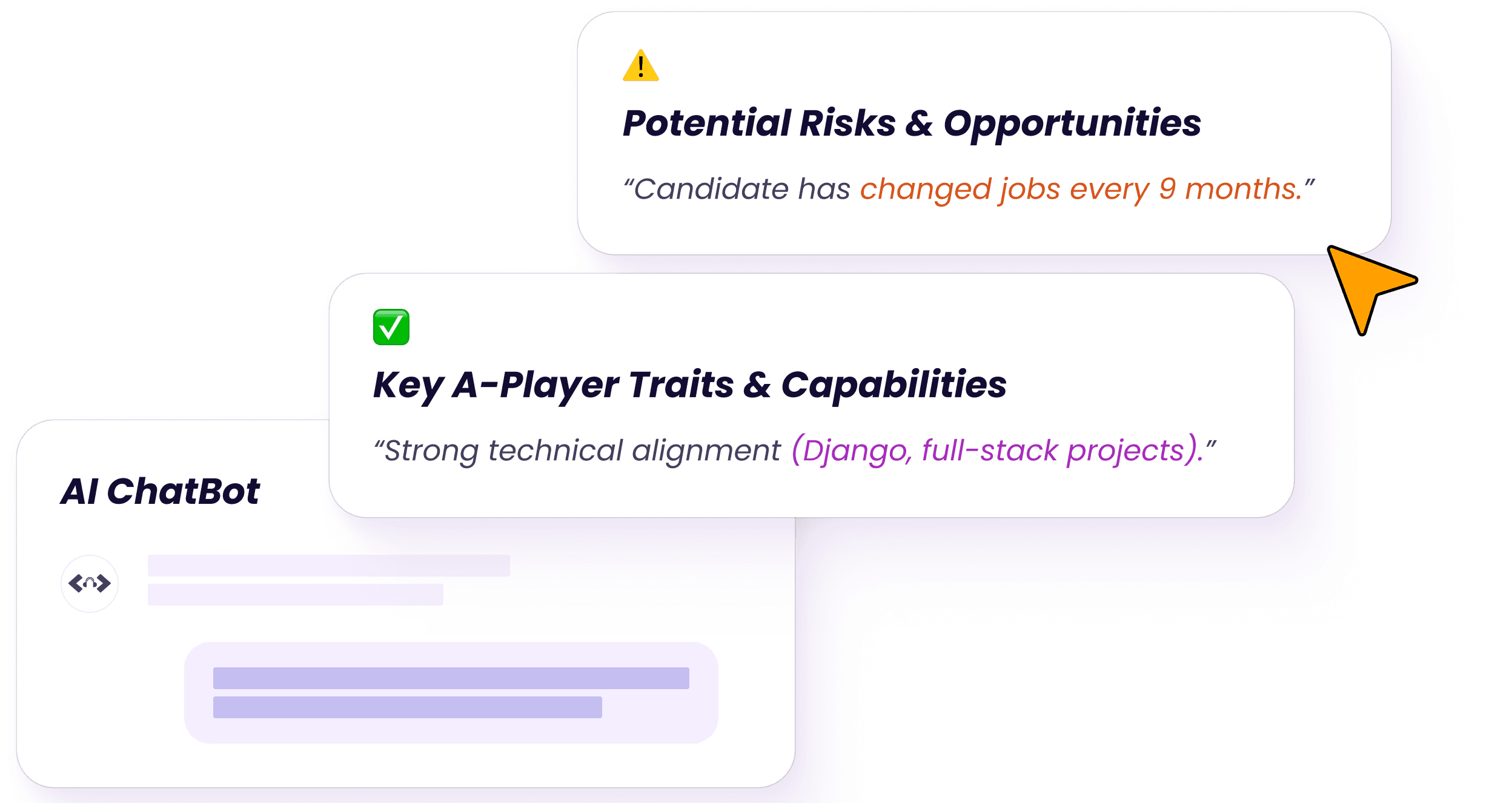
Let AgentR surface the patterns, risks, and opportunities, while you focus on the people.
Great hiring starts with great decisions.
Let AgentR surface the patterns, risks, and opportunities, while you focus on the people.
Great hiring starts with great decisions.
Let AgentR surface the patterns, risks, and opportunities, while you focus on the people.
2026 AgentR, All rights reserved