Your AI Rejected the Best Candidate in the Pool and You'll Never Know
Your AI Rejected the Best Candidate in the Pool and You'll Never Know
Your AI Rejected the Best Candidate in the Pool and You'll Never Know
The hiring industry tracks false positives obsessively. Nobody tracks the other kind.
The hiring industry tracks false positives obsessively. Nobody tracks the other kind.
The hiring industry tracks false positives obsessively. Nobody tracks the other kind.
5 min read
5 min read
5 min read
Get weekly updates
Get weekly updates
Ethics & Bias
Ethics & Bias
Ethics & Bias
Published on:
Published on:
Published on:
Read Time:
Read Time:
Read Time:
Category:
Category:
Category:
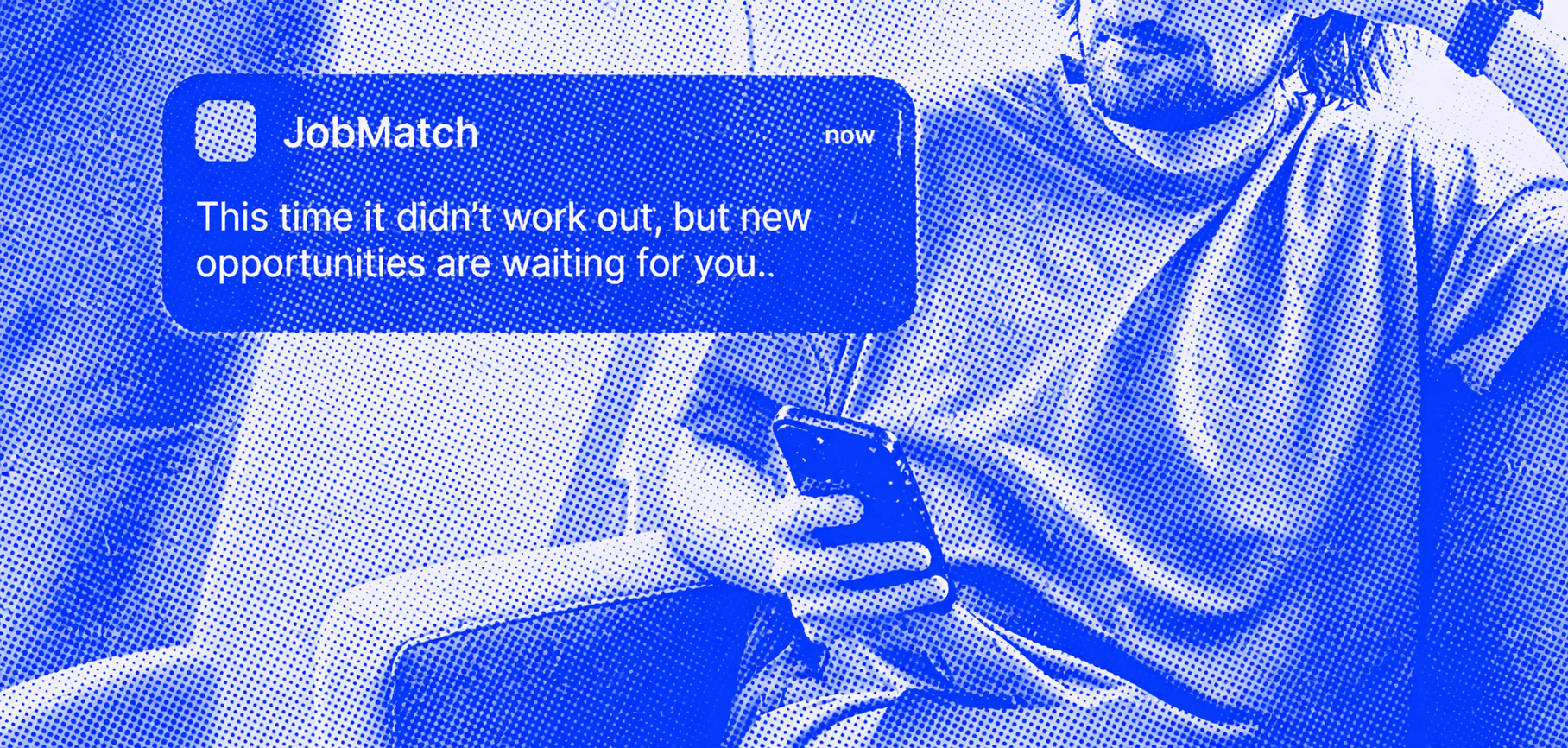
There is a specific candidate who applied to your last open role.
They didn't make the shortlist. They never got a call. As far as your hiring process is concerned, they don't exist, just another data point in the 94% rejection rate that the ATS processed and discarded before a human ever saw it.
Here's what your system doesn't know, and structurally cannot know: that candidate may have been the best person in the pool.
This is the false negative problem. And it is the most expensive, least discussed failure mode in modern recruitment.
The Error Nobody Measures
Hiring systems are designed around one type of mistake: the false positive. The candidate who looks qualified but isn't. The bad hire who slips through. Every layer of the funnel, the ATS filter, the recruiter screen, the competency interview, the reference check, exists to catch this error before it becomes expensive.
The entire AI screening industry is built on reducing false positives. Smarter filters. Better matching. More precise scoring. The pitch, always, is fewer bad hires getting through.
Nobody builds dashboards for the other error.
A false negative in hiring is a qualified candidate who gets filtered out before a human evaluates them. They don't fail an assessment. They don't interview badly. They never get the chance. The algorithm reads their resume, finds something that doesn't match the expected pattern, and moves them to the rejection pile in milliseconds.
The reason nobody measures false negatives is straightforward: you can't. If a candidate is rejected before a human sees them, there is no feedback mechanism. The system doesn't learn. The recruiter doesn't know. The hiring manager never finds out who was in that 370-application pile that the AI compressed to 30.
The error is invisible. And invisible errors don't get fixed.
What Actually Triggers a False Negative?
Understanding who gets wrongly rejected requires understanding what ATS and AI screening systems are actually optimizing for.
Most systems, even the ones marketed as "AI-powered" are fundamentally pattern-matching against the existing population of successful candidates. If your last five successful hires in a given role came from a particular set of companies, used a particular vocabulary, followed a particular career path, the system learns to weight those signals. Future candidates who match that pattern advance. Candidates who don't, don't.
This creates a compounding bias toward sameness. Not demographic sameness necessarily, though that happens too, but cognitive and experiential sameness. The system is trained to reproduce the profile of who has been hired, not who could perform.
The candidates it systematically misses:
Career changers with genuine transferable skills. The operations manager moving into product, the consultant moving into a startup, the military officer transitioning into corporate leadership. Their vocabulary is different. Their job titles don't match the expected taxonomy. The pattern recognition fails. The human who reads their trajectory might see immediately why they're a strong candidate. The algorithm doesn't get that far.
Non-linear career paths. Two years at a startup, a period of freelancing, a role that doesn't fit neatly into a progression story, a gap year, a caregiving break. These look like noise to a system trained on linear progressions. They often represent exactly the adaptability, resilience, and breadth that the role actually needs.
Candidates from outside the industry's reference pool. If your ATS has been trained on 10 years of hiring data from your industry, it has learned to value signals from within your industry. The best candidate for your next head of growth role may have built growth functions in a completely different sector. Your system will score them lower than a weaker candidate with the expected company names.
Plain writers. Not everyone performs on paper. Senior practitioners often write the most economical resumes, they've done the work, they don't need to demonstrate it with adjectives. A junior candidate who has been coached on resume optimization will frequently outscore a far more experienced person who just wrote down what they did.
The Story That Keeps Getting Told
A candidate applies for a sales leadership role. On their resume: an eight-month gap. The ATS flags it. The screening algorithm deprioritizes the application. No human sees it.
What the gap represents: the candidate's father was critically ill. During those eight months, they took on a freelance consulting engagement, part-time, around the caregiving, and tripled the revenue of a small client in four months. They learned more about commercial pressure, prioritization, and resourcefulness during that period than in any structured role they'd held.
The resume didn't say it clearly enough. The algorithm read "gap" and moved on.
This isn't a hypothetical. Every recruiter who has spent time in the industry has a version of this story, the candidate they almost missed, the application that nearly fell through the cracks, the person who looked wrong on paper and turned out to be exceptional. The difference between the ones they caught and the ones they didn't is often nothing more than whether the recruiter happened to read that particular application or not.
The system is making this decision at scale, automatically, and without any mechanism to catch the misses.
Why AI Makes this Harder, not Easier?
The intuition behind AI screening is that it removes human bias from early-stage filtering. And it does, it removes some categories of human bias.
But algorithmic systems don't eliminate bias. They systematize it. They make it consistent, fast, and invisible. A human recruiter who has a bias against a particular background will express that bias inconsistently, some days, in some contexts, with some candidates, the bias operates. Other times it doesn't.
An AI system trained on biased historical data applies that bias uniformly, at every hour of every day, to every candidate in the pool, at a scale no human could match.
A University of Washington study found something particularly important: even when people are explicitly told that an AI system they're using has demonstrated bias, that knowledge is not strong enough to override the system's recommendations in practice. They follow the biased recommendation anyway.
This is the cruelest version of the false negative problem. The recruiter senses something is off. They might even know their ATS has limitations. But the system's output carries enough authority that human judgment yields to it. The correction mechanism, human judgment, gets overridden by the same system that's producing the error.
A Different Question to Start With
The false negative problem doesn't have a purely technical solution. It requires a different evaluation philosophy.
The question that produces false negatives is: "Does this candidate's document match our filter?" It's a pattern recognition question, and it produces pattern recognition answers, candidates who match the expected shape of a strong applicant.
The question that reduces false negatives is: "Does this candidate's actual history suggest they can do this job?" It's an interpretation question. It requires reasoning about what someone did, in what context, with what resources, against what constraints, and making a judgment about whether that translates to the role in question.
That second question is harder to automate. It's harder to scale. It takes longer. It produces shortlists that look less like the candidates you've hired before, which feels risky until you understand that "looks like previous hires" and "will perform well" are not the same thing.
It also requires accepting something uncomfortable: that your screening process, however rigorous it feels, is producing a shortlist that is almost certainly missing some of the best candidates who applied.
The best hire you ever almost made is sitting in a rejection pile somewhere. You'll never know who they were, which role they applied for, or what they would have done. The system wasn't designed to tell you.
That's not an acceptable standard for something that shapes careers, builds companies, and costs this much to get wrong.
There is a specific candidate who applied to your last open role.
They didn't make the shortlist. They never got a call. As far as your hiring process is concerned, they don't exist, just another data point in the 94% rejection rate that the ATS processed and discarded before a human ever saw it.
Here's what your system doesn't know, and structurally cannot know: that candidate may have been the best person in the pool.
This is the false negative problem. And it is the most expensive, least discussed failure mode in modern recruitment.
The Error Nobody Measures
Hiring systems are designed around one type of mistake: the false positive. The candidate who looks qualified but isn't. The bad hire who slips through. Every layer of the funnel, the ATS filter, the recruiter screen, the competency interview, the reference check, exists to catch this error before it becomes expensive.
The entire AI screening industry is built on reducing false positives. Smarter filters. Better matching. More precise scoring. The pitch, always, is fewer bad hires getting through.
Nobody builds dashboards for the other error.
A false negative in hiring is a qualified candidate who gets filtered out before a human evaluates them. They don't fail an assessment. They don't interview badly. They never get the chance. The algorithm reads their resume, finds something that doesn't match the expected pattern, and moves them to the rejection pile in milliseconds.
The reason nobody measures false negatives is straightforward: you can't. If a candidate is rejected before a human sees them, there is no feedback mechanism. The system doesn't learn. The recruiter doesn't know. The hiring manager never finds out who was in that 370-application pile that the AI compressed to 30.
The error is invisible. And invisible errors don't get fixed.
What Actually Triggers a False Negative?
Understanding who gets wrongly rejected requires understanding what ATS and AI screening systems are actually optimizing for.
Most systems, even the ones marketed as "AI-powered" are fundamentally pattern-matching against the existing population of successful candidates. If your last five successful hires in a given role came from a particular set of companies, used a particular vocabulary, followed a particular career path, the system learns to weight those signals. Future candidates who match that pattern advance. Candidates who don't, don't.
This creates a compounding bias toward sameness. Not demographic sameness necessarily, though that happens too, but cognitive and experiential sameness. The system is trained to reproduce the profile of who has been hired, not who could perform.
The candidates it systematically misses:
Career changers with genuine transferable skills. The operations manager moving into product, the consultant moving into a startup, the military officer transitioning into corporate leadership. Their vocabulary is different. Their job titles don't match the expected taxonomy. The pattern recognition fails. The human who reads their trajectory might see immediately why they're a strong candidate. The algorithm doesn't get that far.
Non-linear career paths. Two years at a startup, a period of freelancing, a role that doesn't fit neatly into a progression story, a gap year, a caregiving break. These look like noise to a system trained on linear progressions. They often represent exactly the adaptability, resilience, and breadth that the role actually needs.
Candidates from outside the industry's reference pool. If your ATS has been trained on 10 years of hiring data from your industry, it has learned to value signals from within your industry. The best candidate for your next head of growth role may have built growth functions in a completely different sector. Your system will score them lower than a weaker candidate with the expected company names.
Plain writers. Not everyone performs on paper. Senior practitioners often write the most economical resumes, they've done the work, they don't need to demonstrate it with adjectives. A junior candidate who has been coached on resume optimization will frequently outscore a far more experienced person who just wrote down what they did.
The Story That Keeps Getting Told
A candidate applies for a sales leadership role. On their resume: an eight-month gap. The ATS flags it. The screening algorithm deprioritizes the application. No human sees it.
What the gap represents: the candidate's father was critically ill. During those eight months, they took on a freelance consulting engagement, part-time, around the caregiving, and tripled the revenue of a small client in four months. They learned more about commercial pressure, prioritization, and resourcefulness during that period than in any structured role they'd held.
The resume didn't say it clearly enough. The algorithm read "gap" and moved on.
This isn't a hypothetical. Every recruiter who has spent time in the industry has a version of this story, the candidate they almost missed, the application that nearly fell through the cracks, the person who looked wrong on paper and turned out to be exceptional. The difference between the ones they caught and the ones they didn't is often nothing more than whether the recruiter happened to read that particular application or not.
The system is making this decision at scale, automatically, and without any mechanism to catch the misses.
Why AI Makes this Harder, not Easier?
The intuition behind AI screening is that it removes human bias from early-stage filtering. And it does, it removes some categories of human bias.
But algorithmic systems don't eliminate bias. They systematize it. They make it consistent, fast, and invisible. A human recruiter who has a bias against a particular background will express that bias inconsistently, some days, in some contexts, with some candidates, the bias operates. Other times it doesn't.
An AI system trained on biased historical data applies that bias uniformly, at every hour of every day, to every candidate in the pool, at a scale no human could match.
A University of Washington study found something particularly important: even when people are explicitly told that an AI system they're using has demonstrated bias, that knowledge is not strong enough to override the system's recommendations in practice. They follow the biased recommendation anyway.
This is the cruelest version of the false negative problem. The recruiter senses something is off. They might even know their ATS has limitations. But the system's output carries enough authority that human judgment yields to it. The correction mechanism, human judgment, gets overridden by the same system that's producing the error.
A Different Question to Start With
The false negative problem doesn't have a purely technical solution. It requires a different evaluation philosophy.
The question that produces false negatives is: "Does this candidate's document match our filter?" It's a pattern recognition question, and it produces pattern recognition answers, candidates who match the expected shape of a strong applicant.
The question that reduces false negatives is: "Does this candidate's actual history suggest they can do this job?" It's an interpretation question. It requires reasoning about what someone did, in what context, with what resources, against what constraints, and making a judgment about whether that translates to the role in question.
That second question is harder to automate. It's harder to scale. It takes longer. It produces shortlists that look less like the candidates you've hired before, which feels risky until you understand that "looks like previous hires" and "will perform well" are not the same thing.
It also requires accepting something uncomfortable: that your screening process, however rigorous it feels, is producing a shortlist that is almost certainly missing some of the best candidates who applied.
The best hire you ever almost made is sitting in a rejection pile somewhere. You'll never know who they were, which role they applied for, or what they would have done. The system wasn't designed to tell you.
That's not an acceptable standard for something that shapes careers, builds companies, and costs this much to get wrong.

Great hiring starts with great decisions.
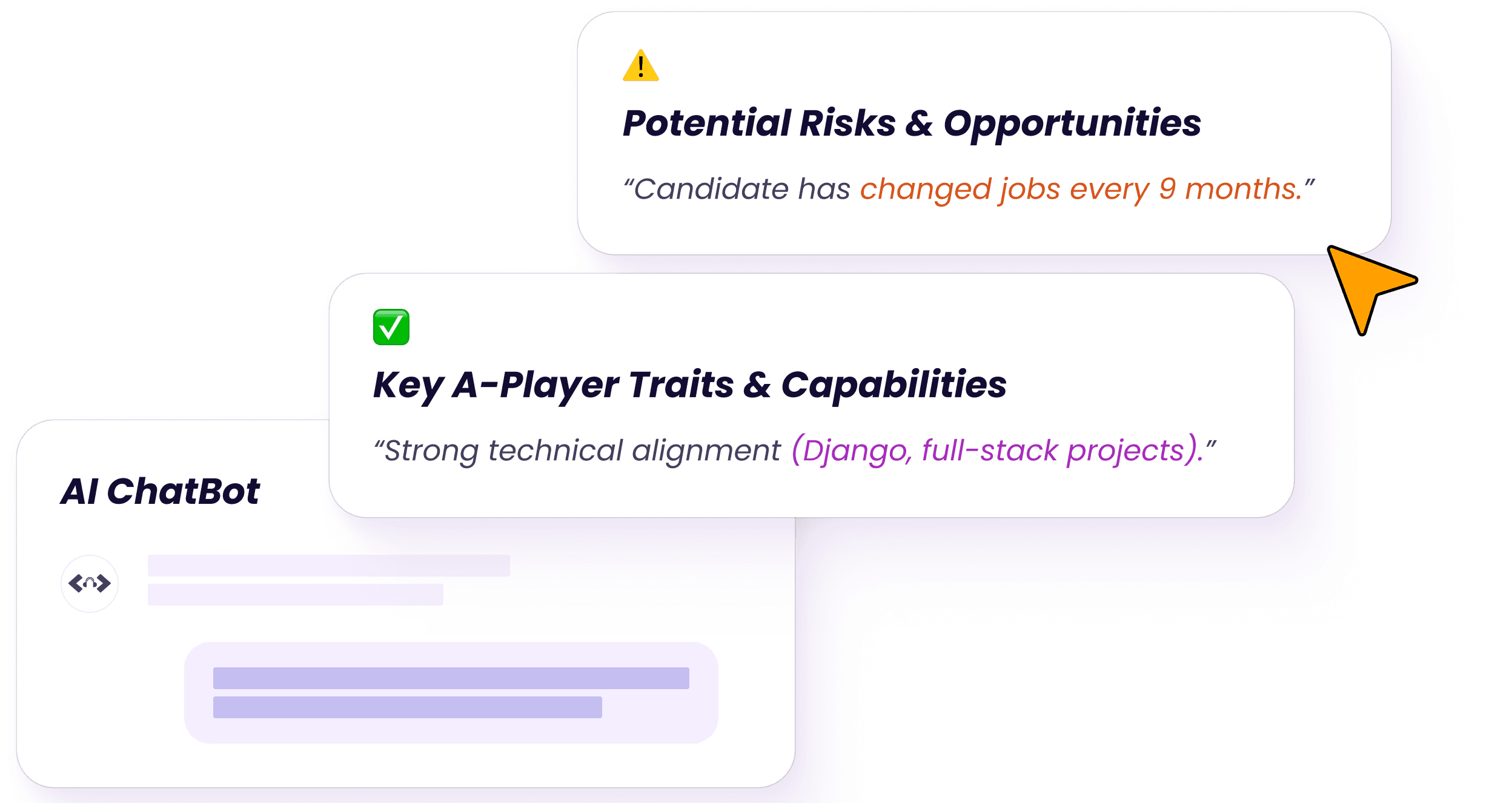
Let AgentR surface the patterns, risks, and opportunities, while you focus on the people.
Great hiring starts with great decisions.
Let AgentR surface the patterns, risks, and opportunities, while you focus on the people.
Great hiring starts with great decisions.
Let AgentR surface the patterns, risks, and opportunities, while you focus on the people.
2026 AgentR, All rights reserved